
Gazpromneft turbine oils: from power plants to the nuclear icebreaker Ural
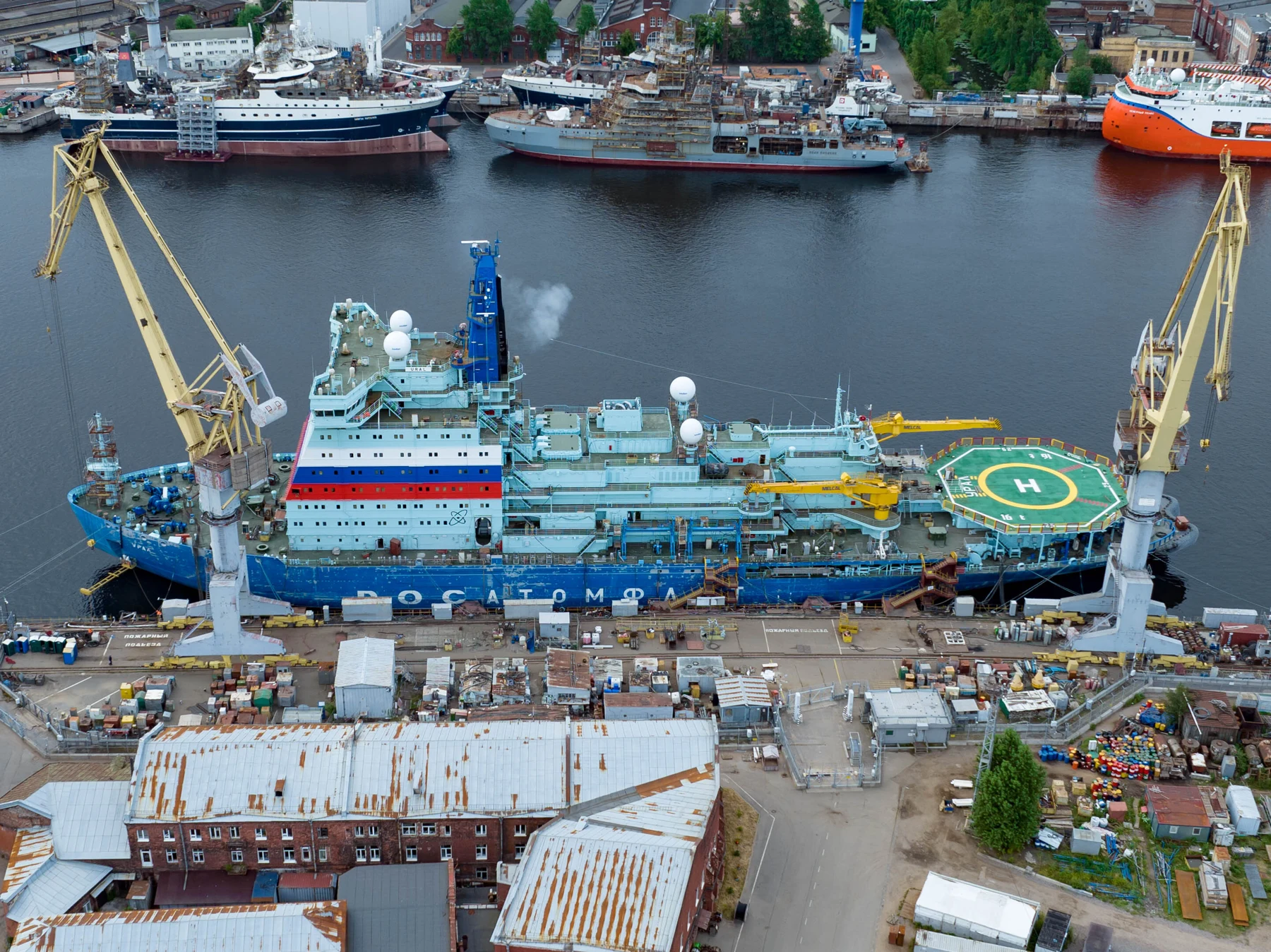
Ural at Baltic Shipyard, July 2022. Photo: Nikolai Bulykin / Wikimedia Commons, CC BY-SA 4.0. Resized, converted to WebP and cropped for display; image source and licence below.
A turbine oil works where equipment reliability depends on a stable lubricating film. Gazpromneft’s portfolio spans steam and gas turbines, combined-cycle units and hydroelectric applications, alongside specialised marine formulations. The nuclear icebreaker Ural provides a striking example of this expertise in the Arctic.
A portfolio built around different turbine duties
Turbine systems differ in bearing loads, oil temperatures, gearbox design and control requirements. Gazpromneft Turbine Oil 32 covers steam turbines, lightly loaded stationary gas turbines and hydroelectric applications. Turbine Oil F Synth EP 32 and 46 address more demanding gas and combined-cycle turbine systems, including applications with gearboxes requiring extreme-pressure protection.
The range also includes TP-22S grade 1 for relevant steam, gas and hydraulic turbine applications. Selection starts with the equipment manufacturer’s specification: viscosity, additive chemistry and approval scope must fit the actual system.
Siemens Energy approval and documented product performance
Gazpromneft Turbine Oil F Synth EP 32 and 46 have formal Siemens Energy approval under TLV 901304 and TLV 901305 for Siemens turbosets with and without gearboxes. The approval letter, dated 8 July 2021 and referenced TEST MLH/2021/154, confirms that the submitted test results meet these requirements.
Lubrizol’s performance letter dated 21 October 2021 also confirms that F Synth EP 32 and 46 meet the listed DIN 51515-1 and DIN 51515-2 requirements, ISO 8068:2006 categories and General Electric performance specifications, including GEK 121608. The confirmation applies to the formulations evaluated in the letter.
| Product | Approval / document | Scope |
|---|---|---|
| F Synth EP 32 / 46 | Siemens TLV 901304 / TLV 901305 | Siemens Energy letter, 8 July 2021: turbosets with and without gearboxes. |
| Turbine Oil 32 | ALSTOM HTGD 90117 | Letter dated 6 August 2012; non-EP oil for gas and steam turbine units. |
| TP-22S grade 1 | Turboatom | Product-specific approval document dated 2009; confirm applicability for the unit being assessed. |
Ural: turbine oil for Arctic navigation
On 31 October 2022, Gazprom Neft announced that its first shipment of turbine oil for the Arktika-class nuclear icebreakers had been supplied to Rosatomflot for Ural. The company described a specialised formulation designed for sustained mechanical and thermal loads.
This is a concrete marine reference within a much broader turbine-oil business. It brings the discussion from catalogue specifications to equipment supporting navigation on the Northern Sea Route.
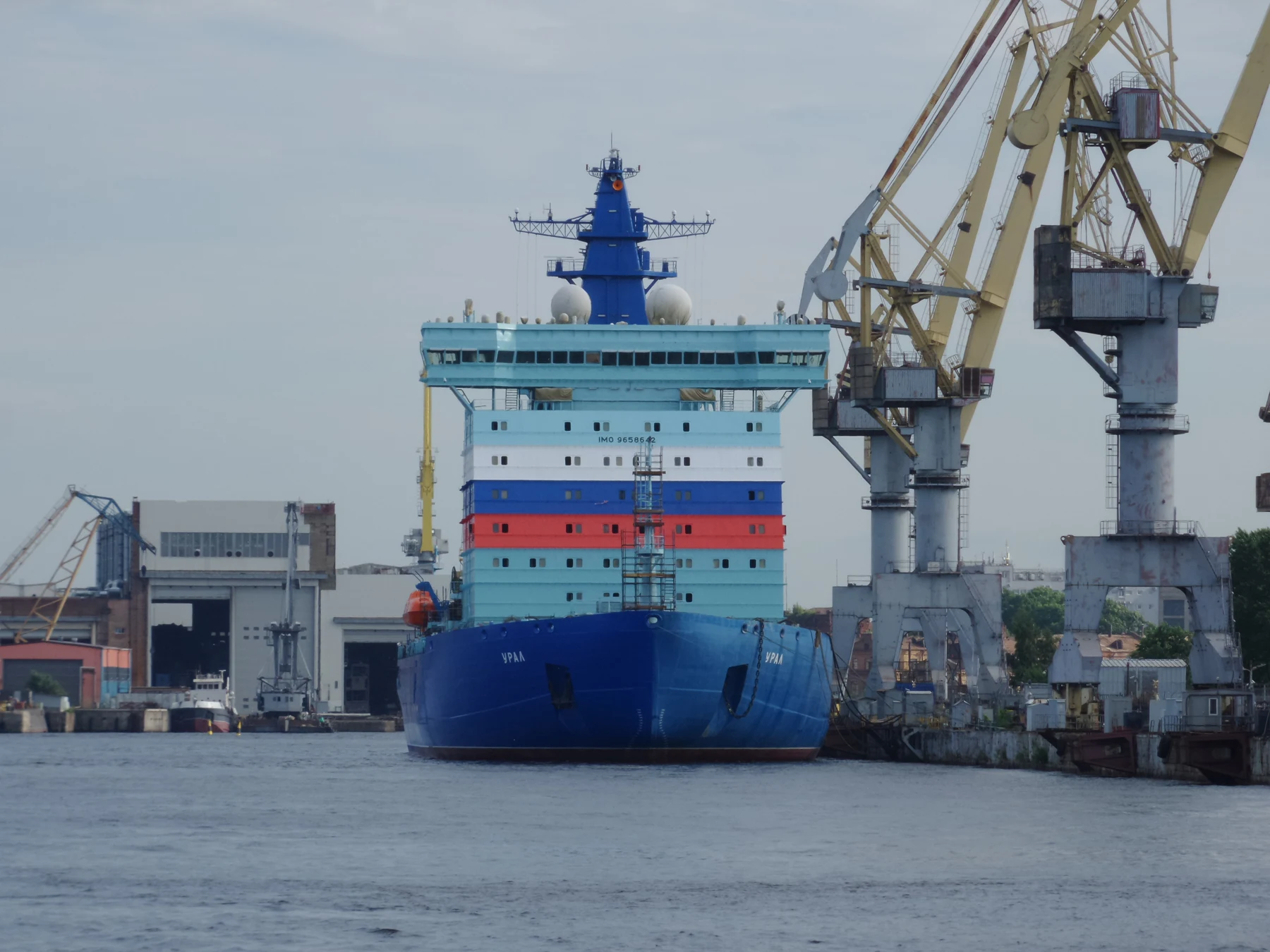
36 MW: the scale of one turbine-generator
Kirov-Energomash, part of Kirovsky Zavod, reported shipping Ural’s starboard main turbine-generator in May 2020. The 36 MW assembly combines a two-cylinder steam turbine with a generator, support structures, steam and oil piping and service platforms. Its reported shipment mass was 245 tonnes.
A steam turbine converts steam energy into rotation; the generator converts that rotation into electrical power. Lubrication keeps the rotating assembly supported on an oil film and carries heat away from the bearings. Reliable oil circulation is therefore one of the conditions supporting continuous operation of the generating equipment. The 36 MW figure refers to this turbine-generator unit.
Measured performance: oxidation resistance, air release and water separation
The F Synth EP industrial range combines hydrotreated mineral base oils with additives for oxidation resistance, deposit control and EP protection in loaded gears and bearings. Lubrizol’s 2021 qualification data for Gazpromneft Turbine Oil F Synth EP 32 show how the oil performs in standardised laboratory tests.
Fast air release helps maintain a stable lubricating film; effective water separation helps the lubrication system remove water. Oxidation testing measures resistance to oil degradation under controlled conditions. The results below are laboratory measurements; an operating oil-change interval is set for the particular machine using OEM requirements and oil-condition monitoring.
| Test / method | Measured result | Engineering relevance |
|---|---|---|
| RPVOT oxidation stability · ASTM D2272 | 3,249 minutes | Resistance to oxidation under the specified test conditions. |
| TOST oxidation stability · ASTM D943 | More than 10,000 hours | Long-term oxidation resistance in the laboratory test. |
| Air release at 50 °C · ASTM D3427 | 1.6 minutes | Rapid release of entrained air. |
| Water separation at 54 °C · ASTM D1401 | 10 minutes | Effective separation of oil and water. |
Izhevsk CHP-1: 8,500 hours in Renk-Maag turbo gear units
Industrial operating experience adds another dimension to the laboratory data. In a reference letter dated 22 May 2023, Izhevsk CHP-1, part of T Plus, reports using Gazpromneft Turbine Oil F Synth EP 46 in Renk-Maag GMX-4-76 turbo gear units as a replacement for SH · TRB CC 46.
The plant reports 24 months of operation, corresponding to 8,500 operating hours, with no operating deviations identified. This gives customers a concrete reference for the product in a named industrial installation.
From Arctic engineering to Indonesian industry
For power generation, industrial utilities and oil-and-gas facilities in Indonesia, the practical priority is dependable turbine operation. The selection process connects the exact machine specification with the right viscosity grade, approval documentation and maintenance plan.
FEOTECH helps customers review these requirements, compare product options and organise technical support. Equipment details, existing oil, operating temperatures and laboratory trends provide the starting point for a recommendation. Oil condition monitoring and a controlled changeover plan then help preserve the performance expected from the selected product.


A short Q&A with FEOTECH
DIRECTOR’S PERSPECTIVEWhy is this example relevant to an industrial customer in Indonesia?
A project such as Ural makes the scale of turbine engineering easy to understand. For our customers, we translate that interest into a practical discussion: which product fits their machine, which documents support the choice, and how to organise supply and technical support. A strong reference opens the conversation; a precise equipment assessment determines the recommendation.
SALES TECHNICAL SUPPORTWhat should customers provide before choosing or changing a turbine oil?
Send the turbine model, OEM oil specification, viscosity grade, information about the gearbox and control system, and the name of the current oil. Operating temperatures and recent oil-analysis results are also useful. We can then assess the relevant product documents and discuss compatibility, flushing, filtration and monitoring for that particular system.
Select a turbine oil for your equipment
Explore Gazpromneft Turbine Oil F Synth EP and contact FEOTECH with your equipment specification for product selection, technical documentation and supply enquiries.